Most Common Construction Management Challenges and Why they Occur


Construction management has never been simple, but the challenges builders face today aren’t the same ones they were dealing with just a few years ago.
In 2026, the pressure looks different. Projects move faster, margins are tighter, and expectations are higher on every side. I see this shift clearly across the construction industry. Rising material costs and ongoing labor shortages are our reality.
At the same time, construction management software adoption has grown rapidly. But using software for financial management or communication hasn’t eliminated complexity. In many cases, it has even introduced new challenges.
This article looks at the most common construction management challenges builders face today and what teams need to manage them more effectively.
Table of Contents
- Construction Management in 2026
- Most Common Construction Management Challenges
- Strategies for Efficient Construction Management in 2026
- Final Thoughts

Construction Management in 2026
Construction management in 2026 is defined by complexity. Builders are handling more data, more stakeholders, and more financial risk than ever before.
Besides, if the business is growing, it iks often spans multiple projects at the same time. Probably a couple of years ago, it could be managed with experience and spreadsheets, but now it requires constant coordination and fast, accurate decision-making.
I see this across the industry. Material prices remain volatile, and labor availability is inconsistent. At the same time cllients now expect more transparency, more accuracy, and fewer surprises, though even as conditions remain unpredictable.
Learn more about the industry outlook:
At the same time, project owners expect clearer reporting, tighter cost control, and real-time insight, no matter if you are a remodeler or a commercial contractor.
Most builders already use construction project management software to manage parts of this process. However, there are different models of using it.
Some continue using estimating, accounting, scheduling, and communication software in separate platforms. While each tool may work well on its own, the lack of connection between them creates blind spots. Data is updated too late, numbers don’t always align, and decisions are made with incomplete information.
Besides, if you use several tools, the risk of spending too much time on onboarding and exploring the details of each software.
Most Common Construction Management Challenges
Let’s divide all challenges into several groups, such as operational, financial, workforce challenges, and technology challenges.
Operational Challenges at Jobsite

Scheduling delays remain one of the most persistent headaches for builders. Projects are increasingly complex, with multiple subcontractors, suppliers, and teams working simultaneously. When schedules aren’t connected or updated in real time, small delays can create unexpected cost problems.
I often see teams struggle because field updates don’t make it back to the office quickly enough. Tasks that appear on the plan today may already be behind tomorrow. Without clear visibility into what’s actually happening on site, project managers are forced to make decisions based on incomplete information, which increases the risk of errors and rework.
Besides, modern construction increasingly demands real-time, centralized communication. When teams can instantly share updates, document changes, and track approvals, the risk of errors drops significantly.
Effective communication between the field and the office isn’t just about faster messages ensures accountability and clarity across every stage of the project. At the same time, keeping clients informed and aligned presents its own challenge.
Recommended reading:
Financial and Cost Control Challenges
Managing project finances remains one of the toughest challenges for builders. Even small errors in cost tracking can quickly escalate.
Many teams still rely on manual methods or disconnected spreadsheets, which makes it difficult to get an accurate picture of expenses in real time.
Change orders add another layer of complexity. Projects rarely go exactly as planned, and untracked changes can quietly consume budgets if approvals and billing are delayed.
For example, on a mid-sized residential project, a flooring change order wasn’t recorded promptly. By the time the oversight was noticed, it had already caused a chain reaction. Suppliers weren’t paid on time, subcontractor schedules were delayed, and the client was questioning the sudden cost increase.
This is just one example of when a project team has to work hard to free up cash, adjust schedules, and renegotiate payments.
Read more about the importance of a cash flow:
The underlying issue is transparency. Structured, real-time tracking of costs, change orders, and approvals is essential for maintaining control, protecting margins, and making informed decisions.

Workforce Challenges
Workforce shortages continue to be a critical problem. According to last year’s reports, the U.S. market, for example, is short of 500,000 workers, which makes it harder to maintain productivity and meet deadlines.
Skilled labor shortages place much pressure on project managers. With fewer qualified workers available, teams have less room for error, miscommunication, or rework.
When workers are scarce, evena small detail is a big problem. Keeping schedules or coordinating teams becomes more difficult.
Another hidden challenge is accountability and knowledge continuity across teams. In many projects, responsibility for specific tasks isn’t clearly documented or tracked, especially when subcontractors come and go.
It can lead to repeated mistakes on future jobs, as lessons learned aren’t preserved or shared. Building and retaining a skilled, coordinated workforce remains a fundamental challenge and affects long-term growth.
Technology Challenges
Construction teams rely on multiple digital tools to manage estimating, accounting, scheduling, and site reporting. While each tool can be powerful on its own, having them operate separately creates more problems than it solves.
In case there are duplicated data and numbers, project managers spend hours reconciling spreadsheets instead of focusing on decisions.
Imagine a project where scheduling, financial, and accounting tools weren’t connected. By the time the office realizes a subcontractor was falling behind on a critical task, the delay already pushes back other trades.
In this case, forecasting is equally difficult as there is no aligned data. The worst part is when the construction projects grow in scale and complexity; these technology challenges make it clear that simply having software isn’t enough. It’s the moment to think about tools with AI and more integrations.
Recommended reading:
Strategies for Efficient Construction Management in 2026
To navigate the growing complexity of construction projects in 2026, builders need smarter processes and tools. Below, I outline key strategies and techniques that help teams overcome operational, financial, workforce, and technology challenges.
#1Centralized Project Management
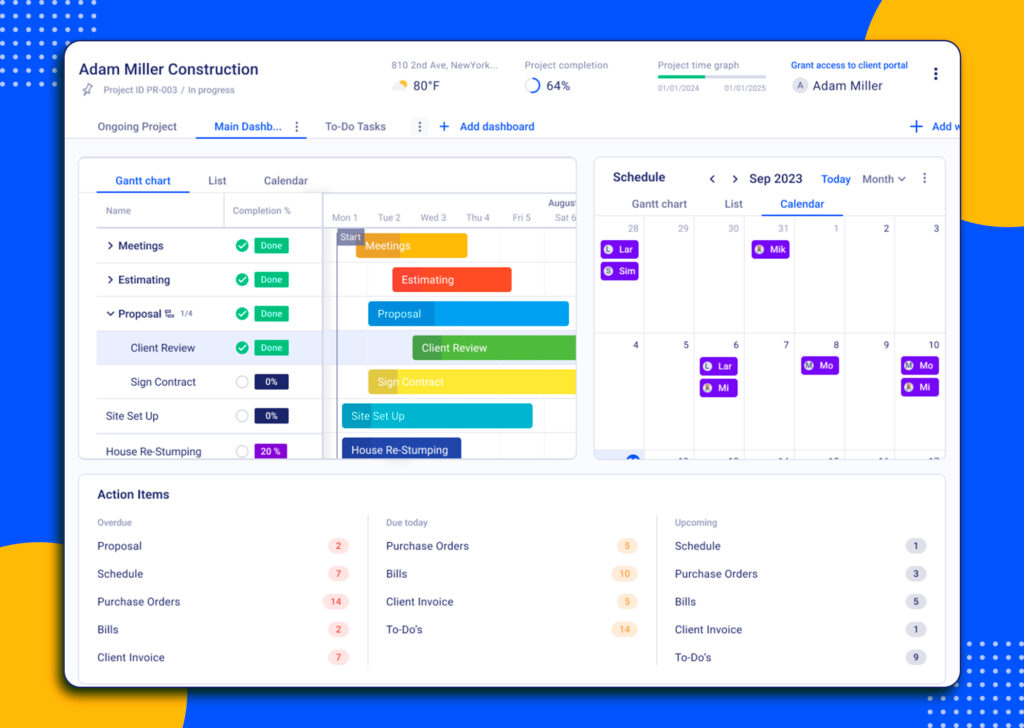
If you have a one-in-one platform for project management tasks, it saves time and money. No scattered data or unaligned schedules. By consolidating estimating, scheduling, and financial management into a single platform, project teams can see the full picture in real time.
Consider a commercial office fit-out where the client requests a last-minute change to the lighting layout. In a disconnected system, the scheduling team, the electrician subcontractor, and the finance team might all try to update their own spreadsheets.
With a centralized platform, the change automatically updates the schedule, budget, and billing.
#2 Using AI Project Management Software
AI-driven construction project management software is no longer a future concept in 2026. It is a practical necessity that can solve several common construction management challenges.
In addition to analyzing the construction project, AI-powered systems help builders understand what is likely to happen next. By analyzing historical project data, current budgets, schedules, and field activity, AI can highlight potential cost overruns, schedule delays, or cash flow gaps before they turn into serious problems.
Recommended reading:
AI also improves estimating, one of the most challenging stages of construction management, I mean. By analyzing historical project data, past estimates, and actual costs, it’s possible to identify patterns that manual estimating often misses.
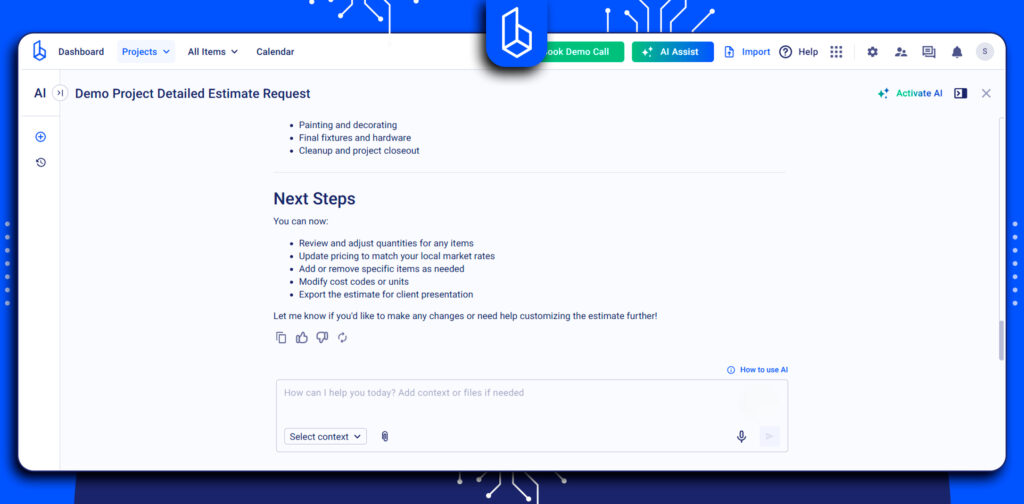
Communication challenges can also be addressed. It starts by analyzing data from schedules, daily logs, photos, and task updates to create a clear, consistent view of project progress.
Instead of relying on fragmented messages or manual summaries, AI turns on-site activity into structured, easy-to-understand reports for teams and clients around the same information.
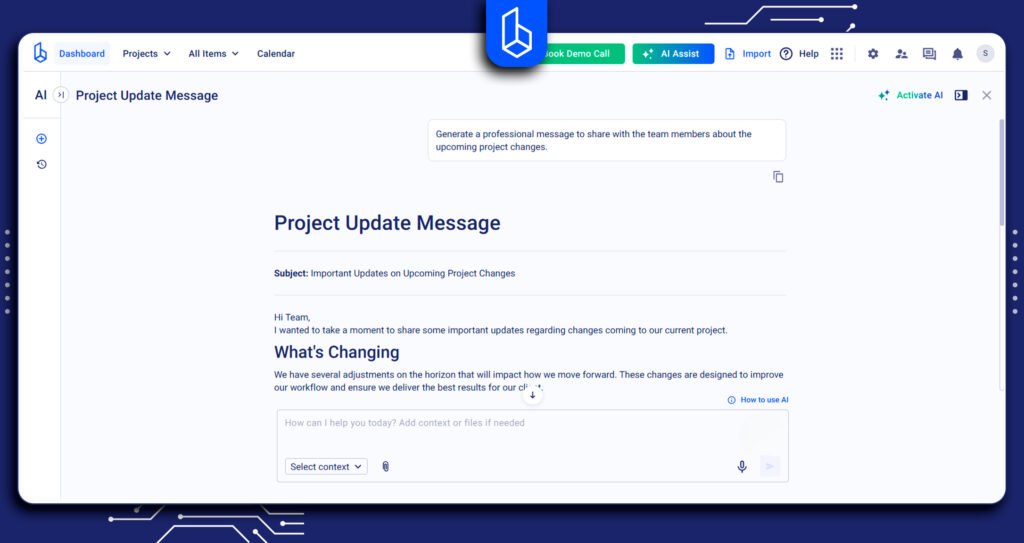
However, clear reporting is not the only solution. Timely access to that information is what enables real collaboration, and let’s see what techniques can be used here.
#3 Real-Time Communication and Collaboration
Communication cannot be truly effective unless every stakeholder can access updates from anywhere.
Mobile accessibility for construction management is crucial. Site teams, project managers, and office staff must be sure they have the same updated data at the same moment.
Portals for subcontractors allow them to view tasks, submit updates, and confirm completions directly from the field. Client messaging features also keep homeowners and stakeholders informed with real-time progress updates and approvals.
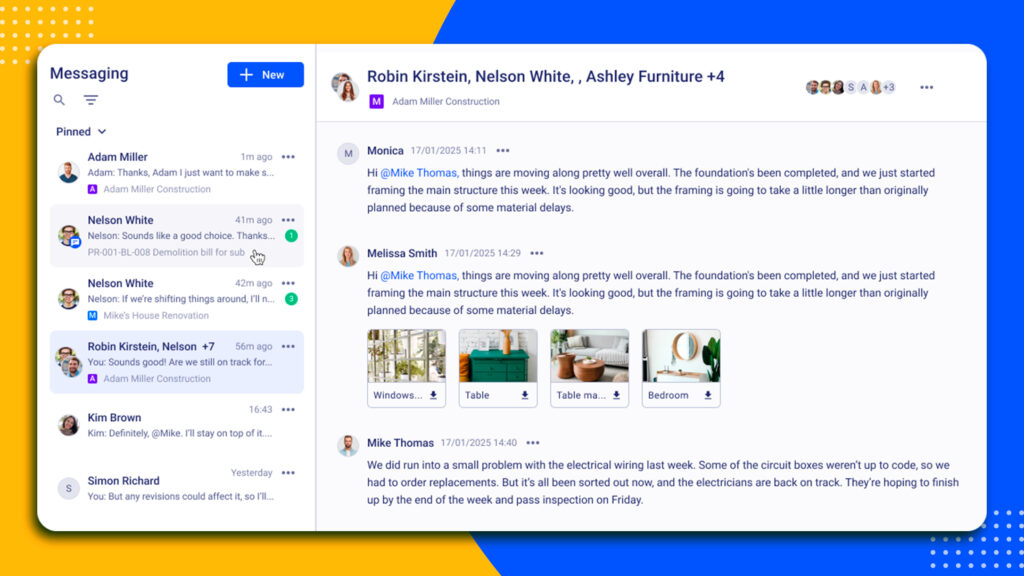
In addition to mobile tools, features such as QR codes and other field-friendly input methods help standardize how information is captured and shared.
More about QR codes:
#4 Standardized Processes and Clear Documentation
Even with the best tools, construction efficiency depends on having consistent, well-documented processes.
Clear document management ensures that responsibilities are well-defined for every team member, including subcontractors, so accountability is maintained even when labor shortages occur.
A centralized documentation flow also improves transparency and financial control. When cost approvals, progress reports, and change orders are consistently recorded, project managers can quickly see when budgets are affected.
Additionally, preserving lessons learned from past projects prevents repeated mistakes and allows teams to make better decisions on future jobs.
#5 Proactive Risk Management and Planning
Construction projects are inherently unpredictable, but proactive risk management helps teams stay ahead of challenges, including labor shortages and material delays.
Planning ahead in construction is crucial in any scenario.
- Conduct weekly or biweekly risk reviews with project managers and site leads to identify potential problems early.
- Maintain contingency plans for labor gaps, supply chain delays, and weather-related interruptions.
- Use checklists and scenario planning to map out critical tasks and ensure responsibilities are clear.
Final Thoughts
Efficient construction management in 2026 requires a combination of smart tools, structured processes, and proactive planning.
Project managers face pressures from rising material costs and labor shortages, as well as managing multiple projects and stakeholders.
Using construction management tools helps overcome several challenges at once. A construction project manager is responsible for the schedule and the financial side of the job.
At the same time, it’s possible to keep an eye on the team to ensure that everyone knows what they are supposed to do and client reports are accurate and sent on time.

What Are the Most Common Construction Management Challenges in 2026?
Builders today face challenges, including project scheduling delays, labor shortages, rising material costs, financial management issues, and fragmented communication.
How Can AI Improve Construction Management?
AI in construction can analyze historical and current project data to point to potential delays, budget overruns, and resource shortages. It also assists with estimating, progress tracking, and automated reporting.
What Strategies Help Builders Stay on Schedule and Reduce Costs?
Builders can stay on schedule and protect budgets by using centralized project management platforms, standardized workflows, proactive risk planning, and mobile-accessible tools.